Hatteras Island Attractions
The natural world is the most stunning Hatteras Island attraction — from Pea Island National Wildlife Refuge to Hatteras Island National Seashore. It’s hard for anything else to compete with the wonders that Mother Nature provides here, so many of the local points of interest are nature-oriented. You can walk mile upon mile of beautifully undeveloped shorefront searching for shells and other treasures or get yourself out into the deep, blue sea on anything that floats—standup paddle boards and kiteboards are the latest crazes. But beyond the water, the landscape and the wildlife, there are some fantastic Hatteras attractions that offer interesting diversions and inform visitors about the rich history of Hatteras Island. The most well-known Hatteras attractions is the Cape Hatteras Lighthouse, but other popular sites will get you up close and personal with the Native Americans who were the real first inhabitants of these island, teach you about how locals predicted weather years ago and about the courageous men from the U.S. Life Saving Service who went to the aid of hundreds of shipwreck victims. The island attractions are either free or charge a very modest fee. Several of the places listed here are also included in Hatteras History, so you may want to refer back to that section for more information. Also see Recreation for other ways to get to know this island.
Avon
- General Information
- Avon
South of the Tri-Villages of Rodanthe, Waves and Salvo, past a sizeable stretch of undeveloped Cape Hatteras National Seashore, Avon is considered the largest and busiest of the Hatteras Island towns (but remember that’s relative to Hatteras Island, not where you come from). Avon has the only two stoplights on the island, the only chain grocery store and the only movie theater. It also has a wealth of accommodations, shops, restaurants, watersports outfitters and a well-loved fishing pier over the ocean. If you’re here to kiteboard, paddleboard or windsurf, Avon can hook you up. South of Avon is one of the island’s most popular kiteboarding and windsurfing spots; it’s known as The Haulover or Canadian Hole.
Hatteras Village
- General Information
- Hatteras Village
On the southern end of Hatteras Island, Hatteras, or as the locals call it, Hatteras Village, is known for its ties to offshore fishing. The village borders Hatteras Inlet, giving recreational and commercial fishing boats an easy route to the Gulf Stream and the inshore fishing grounds. Hatteras has several marinas where commercial and recreational boats dock, making this a great place from which to book an offshore charter. Several motels, plenty of vacation rental homes and restaurants support the fishing and vacation industries. Hatteras also offers a lot more shopping these days, from art galleries to clothing boutiques. One of the Outer Banks’ newest attractions, the Graveyard of the Atlantic Museum, is located here. The ferry to Ocracoke Island leaves from Hatteras Village.
Rodanthe—Waves—Salvo
- General Information
- Rodanthe
Known as the Tri-Villages, the communities of Rodanthe, Waves and Salvo border one another on the north end of Hatteras Island (just south of Pea Island National Wildlife Refuge). The locals know where the villages begin and end, and while the distinction may not really be important to the visitor, it is very important to someone who grew up here. All three villages are small but filled with vacation rentals, campgrounds, small motels, restaurants, shops and watersports outfitters.
Rodanthe is home to the Chicamacomico Life-Saving Station Historic Site, one of the nation’s most complete life-saving sites. Visiting the restored station offers a great history lesson about the service that preceded the U.S. Coast Guard. There’s also an oceanside fishing pier in Rodanthe. Waves is home to two of the Outer Banks’ largest kiteboarding centers and their attendant amenities like restaurants, accommodations and shops. Salvo is the quietest of the three villages, predominantly residential and perfect for a quiet vacation.
Blue Marlin Display
- 57690 N.C. Highway 12, Hatteras Village Library and Community Center
- Hatteras Village
Hatteras Village is the offshore fishing capital of the Outer Banks. Big-game marlin fishing began here in the 1930s. To see a blue marlin (one that’s been mounted and preserved), go over to the Hatteras Village Library and Community Center. On the outside wall, encased in a glass box, is a world-record, 810-pound blue marlin that was caught on June 11, 1962, off Hatteras Island. The world record has since been broken, but this is still an impressive specimen.
Buxton and Frisco
- General Information
- Buxton
Buxton and Frisco are two distinct villages but they border one another (without any parklands in between) so they kind of blend together. Both of these villages are set among the Buxton Woods Maritime Forest, lending a different feel from the villages to the north, and Buxton is situated at the island’s widest point.
Buxton is the home of the world-famous Cape Hatteras Lighthouse, which you can climb for a view of the island. It’s also home to Cape Point, the magnificent point of land that juts farthest into the ocean. Visiting Cape Point (as long as it’s not closed during bird-nesting season) is an essential Outer Banks experience, and the National Park Service offers a campground close by. Buxton offers several accommodations, shops, restaurants and outfitters along with many county services, ballfields, the islands’ schools and the community center known as the Fessenden Center. Frisco is much quieter and predominantly residential, but there are a couple of galleries, a coffee shop and a few other businesses. There’s also an airstrip here. It’s perfect for that feeling of getting away from it all.
Cape Hatteras Lighthouse
- 46379 N.C. Highway 12 and Lighthouse Road
- Buxton
- (252) 995-4474
If any one thing represents all of Hatteras Island, it has to be the famous black-and-white, spiral-striped Cape Hatteras Lighthouse. The lighthouse has become the icon of the island, representing the hopeful, stalwart, survivalist attitude that is so pervasive among the people of Hatteras. This is one of the most famous lighthouses in the nation, especially since it survived a controversial, precarious move in 1999. Now in the hands of the National Park Service, the Cape Hatteras Lighthouse is open to the public.
Visitors 42 inches and taller can climb the spiral staircase up to the top of the lighthouse for an unforgettable view of the Atlantic Ocean, Cape Hatteras and Buxton. For the 2011 season, the climb costs $7 for adults and $3.50 for children 11 years of age and younger and seniors ages 62 and older. The lighthouse is open from the third Friday in April through Columbus Day. Lighthouse tours begin at 9 a.m. daily and run every 10 minutes with a limit of 30 visitors per tour. The last tickets of the day are sold at 5:40 p.m. between Memorial Day and Labor Day and 4:40 p.m. other times of the year. This is a very popular attraction and no advance tickets are sold, so the best thing to do is to get there early (before noon) and visit the ticket booth to buy a ticket, which will state the time of your tour. The ticket booth opens at 8:15 a.m. Be sure to be at the gate five minutes before your tour time. A museum about lighthouses and the history of the Outer Banks is located inside the historic Double Keepers’ Quarters Building just across the lawn from the lighthouse. Hours are 9 a.m. to 6 p.m. in summer and 9 a.m. to 5 p.m. the rest of the year.
FYI: The Cape Hatteras Lighthouse in Cape Hatteras National Seashore, along with Wright Brothers National Memorial, are designated Federal Recreation Fee Areas. Eighty percent of the funds generated by park fees are used to improve visitor facilities within the Outer Banks Group. The remaining 20 percent support projects in other National Park Service areas.
Cape Hatteras National Seashore/Hatteras Island Visitor Center
- 46379 N.C. Highway 12 and Lighthouse Road, At the Cape Hatteras Lighthouse
- Buxton
- (252) 995-4474
The National Park Service’s Hatteras Island Visitor Center is located at the Cape Hatteras Lighthouse site. Maps, informational brochures and the park newspaper are available here, and staff can answer any questions you have about visiting Cape Hatteras National Seashore. Lots of parking and restrooms are on site. There’s also a bookstore with gifts. Inquire at the Visitor Center about the ranger-led history and nature programs that are held regularly from Memorial Day through Labor Day or visit www.outerbanksthisweek.com for complete information on their programs. The Visitor Center is open 9 a.m. to 6 p.m. in the summer months and 9 a.m. to 5 p.m. the rest of the year.
Chicamacomico Life-Saving Station
- 23645 N.C. Highway 12, MP 39.5
- Rodanthe
- (252) 987-1552
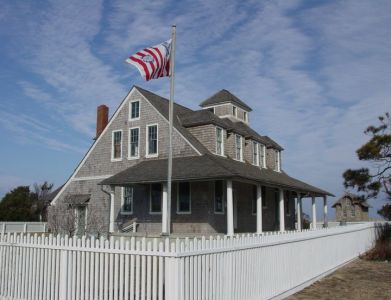
The Chicamacomico Life-Saving Station is the nation’s most complete existing example of the life-saving stations that were built along the coast in the late 19th century to attend to shipwrecks and rescue survivors. The 1874 station was the first operational life-saving station built in North Carolina, serving until 1954. Chicamacomico has been partially restored, thanks to numerous volunteers who formed a nonprofit organization to save it, and it is now a fine museum and historic site; all structures are original buildings. It is also the only place anywhere in the world that re-creates the full historic beach apparatus life-saving drill on a regular basis.
On a visit here you’ll see the 1874 Station, the 1911 Station, two cookhouses, water tanks and cistern, a stable, a tractor shed, the smaller boathouse (now the Visitors Center) and a village home built in 1907. In the museum, you’ll learn about the U.S. Life-Saving Service and some of the rescues that occurred here. Artifacts, uniforms, rescue equipment, displays and video presentations abound, and self-guided tours help complete your knowledge of place and history. These stations have many stories to tell. Life-saving crews at Chicamacomico performed many daring rescues, including one of the greatest rescues of WWI, that of the British tanker Mirlo in 1918. When the Mirlo was sunk by the German submarine U-117, Chicamacomico’s crew rescued 42 of 51 British sailors. The gift shop is full of unique nautical items and works by local craftspeople plus books and old-fashioned toys.
June through August, try to catch any of the special programs offered Monday through Friday at 2 p.m. Mondays, hear about the movie Nights in Rodanthe, which was filmed on Hatteras Island. Tuesdays hear true shipwreck and rescue stories. Wednesdays hear native Hatteras Islander Carol Dillon speak about being the real-life inspiration for the book Taffy of Torpedo Junction. Thursdays is the popular historic Beach Apparatus Drill Re-enactment – the only Breeches Buoy demonstration in the country performed by active-duty U.S. Coast Guard personnel. Fridays hear author Scott Dawson’s ideas about what really happened to the Lost Colony. Programs are free with paid admission to the site.
In 2011, Chicamacomico is celebrating the centennial anniversary of the 1911 station. On August 4, 2011, the 1911 station will be the focus of a 100th anniversary celebration at Chicamacomico, in conjunction with the site’s annual American Heroes Day. It’s a fun day with Coast Guardsmen, firefighters, ocean rescue personnel, police officers and EMS officials together on the Chicamacomico site, plus the beach apparatus drill and a very exciting Coast Guard helicopter search and rescue demo. The centennial celebration will add even more excitement to the annual event.
The site is open from mid-April through Thanksgiving weekend, Monday through Friday from 10 a.m. to 5 p.m. Admission fees are charged.
Frisco Native American Museum & Natural History Center
- 53536 N.C. Highway 12
- Frisco
- (252) 995-4440
The Native American history of Hatteras Island and the Native American culture of our nation are preserved at this must-see museum in Frisco. The founders of this museum, Joyce and Carl Bornfriend, have taken great care to preserve Native American heritage, and their collection of artifacts, exhibits and natural history displays is nationally recognized and respected. The galleries include information on Native Americans across the United States. Particularly interesting to Hatteras Island visitors are the artifacts from the Native Americans who once inhabited this island. A dugout canoe, which was found on the museum property, is displayed with tools, instruments and other items uncovered on the island in an archaeological dig conducted by East Carolina University; these items offer a glimpse into the island’s previous life.
The museum recently opened almost 1,000 square feet of new exhibits, including an art gallery and a new room overlooking a beautiful bird garden. The gift shop has a great variety of Native American-made items, including arts and crafts, walking sticks, dream-catchers, moccasins, jewelry, paintings, drums, pottery, handmade knives and much more. The facility also includes a book store and even an antiques gallery operated by Friends of the Museum. While you’re here, be sure to walk on the museum’s nature trails that wind through several acres of maritime forest.
Museum hours are 10:30 a.m. to 5 p.m. Tuesday through Sunday. Winter hours may vary; call for confirmation. Cost is $5 per person, $3 for seniors or $15 per family. Guided tours for groups are available. The museum sponsors a not-to-be-missed annual Inter-Tribal Powwow and living history weekend on Hatteras Island in April.
Graveyard of the Atlantic Museum
- 59200 Museum Drive
- Hatteras Village
- (252) 986-2995, (252) 986-2996
At the end of N.C. Highway 12 next to the ferry terminal, the Graveyard of the Atlantic Museum attracts a lot of attention with its unique, ship-like building, porthole windows and curved timbers. One of three North Carolina Maritime Museums operated by the North Carolina Division of Cultural Resources, the museum focuses on the maritime history and shipwrecks of North Carolina’s Outer Banks, often called the Graveyard of the Atlantic. Exhibitions emphasize the periods from 1524 to 1945, with shipwreck artifacts and memorabilia on display and changing exhibits telling the dramatic tales of shipwrecks and life saving along the Carolina coast.
You can visit the museum for free and see the original 1854 lens to the Cape Hatteras Lighthouse, the Enigma machine from the U-85, the bell from the Diamond Shoals Lightship (which was sunk by the Germans in WWI) and other exhibits on maritime history and shipwrecks.
From August 15, 2011, through July 15, 2012, the museum will host Flags Over Hatteras, an exhibition commemorating the Sesquicentennial (150th) anniversary of the Civil War on Hatteras Island. Historic events included the first Union victory of the war, which led to the loss of the inland waterways of eastern North Carolina. The exhibition is focused around the little-known assaults on Forts Hatteras and Clark, which took place August 28 and 29, 1861. Displays will also explore the capture of the Fanny and The Chicamacomico Races and will feature items and documents from the period.
A Flags Over Hatteras conference will be held in Hatteras from August 22 through 28 and will feature the most prominent Civil War historians in the country. Held at the Graveyard of the Atlantic Museum and other locations, the conference will feature a VIP Blue-Gray reunion, lecturers, speakers, living history programs and an auction. See www.flagsoverhatteras.com for more information.
The museum holds frequent programs in the summer months. On Second Saturdays and Tuesdays at 2, you can hear speakers. On Tuesday, Wednesday and Thursday there are activities for kids. Call for a schedule or go to the web site at www.graveyardoftheatlantic.com for more information.
From April through October, hours are Monday through Saturday from 10 a.m. to 4 p.m. From November through March, hours are Monday through Friday from 10 a.m. to 4 p.m. Admission is free. When you’re here, check out the historic markers in the parking lot, which tell interesting stories about the Civil War on the Outer Banks.
Hatteras-Ocracoke Ferry
- End of N.C. Highway 12
- Hatteras Village
- (252) 986-2353, (800) BY FERRY
For a free boat ride, drive onto the ferry at the south end of Hatteras Island. You’ll cross Hatteras Inlet and end up on the absolutely charming island of Ocracoke, where you’ll definitely want to spend a few hours or a whole day exploring the village shops, restaurants and historic sites (and pick up a copy of our sister paper, the Ocracoke Island newspaper, or click on the Ocracoke tab at the top of this page ). The ferry ride is about 45 minutes long. Once you get off the ferry onto Ocracoke Island, you’ll need transportation — your car or a bicycle — because it’s about 13 miles from the ferry dock to the village. But you can walk right over to the pristine beaches of Ocracoke right from the ferry docks. The ferry is free. In the summer (April 19 to October 11), the ferry runs every hour from 5 a.m. to 7 a.m., every 30 minutes between 7:30 a.m. and 7 p.m. and every hour between 8 p.m. and midnight. Call for off-season hours or go to the Information section of the Ocracoke site. This ride may not be free forever (the state may need the money someday), so be sure to enjoy it while it is!
Pea Island National Wildlife Refuge
- N.C. Highway 12
- Hatteras Island
- (252) 987-2394
The refuge’s Visitor Center, located on the northern end of Hatteras Island about 4 miles south of Oregon Inlet, is a good place to start a Pea Island visit. It gives an introduction to the ecosystems and wildlife of the refuge and the activities that are permissible there. You may also pick up informational brochures, the National Park Service’s newspaper and trail maps. A restroom and plenty of parking are available. You may start your walk on North Pond Wildlife Trail here.
The Visitor Center is open 9 a.m. to 4 p.m. every day. Beyond the Visitor Center, Pea Island National Wildlife Refuge is a 13-mile stretch of pristine barrier island. The beaches are wonderfully devoid of people most of the time, and there are several access points for getting to the beach. Pea Island is also great for surfing, surf fishing, shell hunting, kayaking, photography and other eco-friendly outdoor activities. Driving on the beach is not allowed here. Leashed pets are allowed on the beach, but not on the walking trails or overlooks.
North Pond Wildlife Trail is a good, flat, easy trail that starts at the Pea Island Visitor Center, about 4 miles south of Oregon Inlet. Park in the parking lot and look for the North Pond Wildlife Trailhead behind the restrooms. A sturdy, handicapped-accessible boardwalk leads back into the marshy areas around North Pond where you’ll see a variety of birds and wildlife. The trail turns into a hard-packed natural surface that extends for a half-mile and ends in a two-level observation tower where you can see from sea to sound. After North Pond Wildlife Trail ends, you may keep going on an unpaved service road that takes you all the way around the pond. This service road connects with the Salt Flats Wildlife Trail, and at the end (N.C. Highway 12) you can either turn back and go the way you came or cross over the dunes and walk along the beach to get back to the Visitor Center. The entire loop, if you take the beach route, is about 4 miles. The northern leg of the North Pond circuit is prone to excessive mosquitoes at all times of the year. Don’t let that keep you away; just bring insect repellent.
You may also park at the Salt Flats Wildlife Trailhead, a little over a mile north of the Visitor Center. You’ll see a lot of birds on these trails no matter what time of year you’re here, but this hike is most phenomenal in the fall and winter, when thousands of migratory birds are resting over on the pond. You’ll see snow geese, Canada geese, tundra swan and numerous species of ducks. You may pick up trail maps at the Visitor Center from 9 a.m. to 4 p.m. every day or from the racks on the front porch after hours.
Guided bird walk programs are offered at Pea Island National Wildlife Refuge year round, and other programs — Turtle Talks, Soundside Adventures and Birds and Their Adaptations — are offered in the summer months. Canoe tours are offered during the warmer months as a fee-based program. See www.fws.gov/alligatorriver/spec.html for a list, or call the visitors center. Also see our writeup on Pea Island National Wildlife Refuge Activities in our Recreation section.
Sandy Bay Gallery
- 56910 N.C. Highway 12, Stowe on 12
- Hatteras Village
- (252) 986-1338
Sandy Bay Gallery is a standout among the art galleries on the Outer Banks. A favorite place to shop for locals and visitors alike, it is a place of pure creativity, with original fine artwork by locals and artists from around the country. You’ll find jewelry, canvas, art glass, sculpture, iron, clay and much more.
The Frisco Jubilee
- Various locations
- Frisco
- (252) 995-3540
Every Friday night from Memorial Day to Labor Day, be sure to catch Hatteras Island’s best musicians for a night of pickin’ and singin’ old favorites, classic bluegrass, gospel and Outer Banks originals at the Frisco Jubilee. Some of the musicians you might see include Speedy Price, Mahlon Blue, John Couch, April Trueblood, Caitlyn Gray, Johnnie Baum, Clifford Swain and Jaki Gray. The venue rotates between various locations, so look for local fliers or call the number above to find out where it’s going to be held when you’re here. The show begins at 7:30 p.m., and tickets are sold at the door for $10 each. Watch for special performances to be held in Rodanthe and Hatteras Village. Call for information.
U.S. Weather Bureau Station/Hatteras Welcome Center
- Hatteras Village
- (252) 986-2203
In the late 19th and early 20th centuries, weather observations gathered near Cape Hatteras were important for forecasters all along the East Coast. The Hatteras Island weather station was so critical that in 1901 the U.S. Weather Bureau constructed a dedicated Weather Bureau building in Hatteras village, one of only 11 such buildings constructed in the nation at the turn of the century. The building still stands in Hatteras village and is next to the Burrus Red & White grocery store at the corner of Saxon Cut and Kohler roads. The National Park Service restored the building to its original 1901 appearance, yellow exterior and all. The NPS had the benefit of the original building plans to aid in its restoration, so the building is true to the original. The Outer Banks Visitors Bureau operates a visitors/welcome center in one room of the building; stop by to pick up tourist information and also to see the interior of this historic building. Hours are 9 a.m. to 5 p.m. daily in season (with the exception of a short lunch break); call for off-season hours. They close in January and February.
Unloading Catches at the Docks
- Hatteras Village Marinas
- Hatteras Village
For a chance to see the offshore boats unloading the day’s deep-sea catches, head down to one of the Hatteras Village marinas between 3:30 and 5 p.m. When the boats come in, the fishing mates unload the day’s catches onto the docks so the fish can be taken away and cleaned. Most days you’ll see something, usually yellow-fin tuna, mahi mahi and wahoo or some other interesting fish. The big-game fish are caught and released, so you won’t see all the white marlin, blue marlin and sailfish that were caught that day, though you can count the flags on the boats to see how many were released. If you’re really lucky in the winter months you might see a boat bring in a giant blue-fin tuna.